His career was looking up
Airport manager Jerry Thornton
had a passion for the International Air Show
and he never missed one in 55
years
by NOREEN SHANAHAN
Special to The Globe and Mail
June 8, 2009
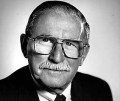 Jerry Thornton was familiar a
sight at the Toronto Island airport, working as an air traffic controller,
assistant airport manager, and manager for more than three decades. His duties
included overseeing performances by the Canadian International Air Show and he
had diverse responsibilities with this mandate.
For instance, he had old brush
and Christmas trees loaded onto a barge, lit on fire, and shoved into Lake
Ontario's inner harbour. Then he had the Ministry of Natural Resources show off
their expertise to impressed audiences by dousing the flames with water cannons.
Another air show task was
positioning huge inner tubes onto the lake as targets for skydivers. Earlier in
his career, Mr. Thornton worked in the control tower at Malton airport, west of
Toronto, which has since become Pearson International.
Born in Toronto in 1922, he
was a bright kid who knew more than just how to hammer a nail into a wall. He
loved nature, chess, Meccano, monopoly, and rewiring the house.
Once dull afternoon he built a crystal radio set just to
pass the time. Growing up in Toronto between the wars, he hurried
through Blythwood public school and Lawrence Park Collegiate in order to attend
Radio College of Canada in 1939, and get to include the
Morse code as homework.
His father, Heber Thornton,
was chief chemist for Canada Dry and encouraged his son's expanding interests.
After graduating in 1941, Jerry joined the Merchant Navy as a
radio operator, working for the wireless
company British Marconi. As were all operators at the time, he was referred to
as 'Sparks.' Mr. Thornton was due to sail on
his first ship leaving from Houston, but he arrived a day late. As it turned
out, this ship was torpedoed and sunk a few days later.
During the war, Merchant Navy
ships had no defence except an armed convoy circling them. Sometimes, due to
circumstances such as surrounding ships being bombed, they were left as sitting
ducks. As a radio operator, Mr. Thornton
used the Morse code to receive or send messages between ships in the convoy.
Ships had their own call signal to identify them as they passed information back
and forth. Once, he was warned about a pack of U-boats spotted close to the
Halifax port. He relayed this message to the captain and the ships immediately
turned back.
Mr. Thornton crossed the
Atlantic 30 times, carrying loads as diverse as soldiers, munitions, food,
medical supplies, and even peanuts from Africa. In fact, peanuts might have once
saved his ship from going down. According to his daughter, Nancy Thornton, Mr.
Thornton was in a convoy of 50 ships destined for England. Because his ship was
loaded with peanuts and floated high in the water, Mr. Thornton thought a
torpedo passed beneath it and hit the ship directly on the right. "[That ship]
exploded and sank immediately, but they weren't touched at all by this torpedo,"
Ms. Thornton said. Only 25 of these 50 ships arrived safely in England,
highlighting the treacherous nature of this work.
"You'd wake up in the morning
and the ship that was two miles off your port was gone," said his friend Ron
Devlin, telling some of Mr. Thornton's war stories. "The destroyers and escorts
were the ones that tried to look after that, and the convoy just kept moving."
Meanwhile, men blown overboard from bombed vessels were abandoned in fiery,
debris-ridden waters. These images haunted Mr. Thornton for the rest of life.
During the war, the Merchant
Navy was considered a civilian organization. Only recently, after years of
lobbying by former Merchant Navy members, was it recognized by Ottawa as having
contributed to the war effort. Its members were then entitled to veteran's
benefits, and Mr. Thornton was therefore able to live out his last days in a
veteran's wing of a Toronto hospital.
In 1943, Mr. Thornton was
given a medical discharge due to stress and spent time recovering in a London
hospital. Finding himself stranded in London, he found work with the Norwegian
Trade Mission and crossed the Atlantic three more times. Years later, he was
given a medal from the Headquarters Defence Command in Norway for his service,
thanking him for contributing to "Norway's fight for freedom."
Mr. Thornton arrived back in
Canada in late 1943 and found work as a radio operator
with the Department of Transport in Ottawa. He quickly became bored with this
job and spent the next two years at a weather station in Inukjuak [then Port
Harrison], an Inuit settlement on Hudson's Bay. Mr. Thornton remembered the
generosity of his neighbours, the taste of walrus meat, and being rescued after
flipping his canoe in frigid water. "He was known as 'the man with four eyes who
fell into Hudson's Bay,' " his daughter said.
In 1947, Mr. Thornton moved
back to Toronto and trained as an air traffic controller at the Malton airport.
Not many years earlier, this airport had consisted of two hard-surfaced runways
and a grass landing strip. The terminal was in a converted farmhouse.
After a short while, Mr. Thornton wanted work closer to the city, since he had
married Lucy Glenys Cuff. The couple moved into her family's North Toronto home
where they lived, raising their two children, for nearly 60 years.
In 1954, Mr. Thornton was
hired as an air traffic controller at the Toronto Island airport. He left
Transport Canada in 1961 to become assistant manager and then manager of the
tiny airport's operations, under the auspices of the Toronto Harbour Commission.
This role included working on the International Air Show, held at the Toronto
waterfront on Labour Day weekends. He often invited Glenys, and their children
for a picnic on the tarmac and a birds-eye view of the show.
As airport manager, Mr.
Thornton arranged safe landings for medical aircraft. He watched ambulances
cross the ferry, then speed up Bathurst Street to the Toronto Western Hospital,
about 10 minutes away. His daughter recalls Sunday dinners cut short by urgent
phone calls concerning such emergencies.
Mr. Thornton saw huge changes
happen on the tiny strip of land edging the city's shore. "When I came here we
only had two runways, hangars 3 and 4 hadn't been built, there were no lights on
the runways, and no weather office," he told the Toronto Star in 1986. But
according to current airport director Ken Lundy, operations were actually busier
during Mr. Thornton's time than they are today, even with the popular Porter
Airlines flying in and out several times a day. "There was more general
aviation, probably over 100,000 movements annually, operating with a very old
ferry, an open-air barge, and other challenges," he said, comparing that number
to 95,000 movements today, including 14,000 by Porter Airlines.
Mr. Thornton retired in 1987,
but continued as a volunteer with the air show. He returned every September to
crane his neck along with hundreds of other keen spectators. His favourite
moments were watching the lumbering Lancaster bomber cross the sky, and the
show's finale, a beautifully choreographed stream of Snowbirds. In 2007, Mr.
Thornton was inducted into the Air Show's Roll of Honour for his exceptional
attention to the show's smooth operations. He never missed a show in 55 years.


It is with deep sorrow that we
announce the death of Jerry Ure Thornton who
died on May 13th, 2009 in his 87th year. Predeceased by his beloved wife,
Glenys, for over 57 years. Loving Dad of Nancy Glenys and David Jerry and Lesia
Irene. Doting granddad of Daria Lesia. He will be remembered by his sister Gwen
and brother-in-law Don and sister-in-law Dorothy and his dear nieces and
nephews, great-nieces and great- nephews, colleagues and friends. He was
predeceased by his parents, Heber and Muriel and his brother, Clifford.
Jerry was proud of his service
in the 1939 to 1942 war effort, serving as "Sparks",
a radio operator in the Merchant Navy with
British Marconi and the Norwegian Trade Mission. After the war, he continued to
serve his country working for the Canadian Government as a weather man/
radio operator at Port Harrison on Hudson's Bay
in northern Quebec.
He became an air traffic
controller, working in the 1950's at Malton Airport, now Toronto International
Airport and later the Toronto Island Airport, now City Centre Airport. In the
1960's, Jerry became the Assistant Airport Manager and finally Airport Manager
at Toronto Island Airport, retiring in 1985.
During his tenure at the
Island Airport, he became involved with the Canadian International Air Show,
that involvement in many different capacities lasted more than 50 years. Jerry
was inducted into the CIAS Roll of Honour in 2007. Jerry spent his final days at
the Veteran's Residence at Sunnybrook Health Centre in Toronto.
The family would like to thank
all the staff of K and L-Wings for their kind support and loving care.
Everything possible was done to make Jerry comfortable and safe and
well-treated. Our special thanks and recognition go to Dr. Derring and his
primary nurses, Flo and Kathy. A celebration of Jerry's life will be held on
Monday, May 18th, 2009 at 10 a.m. followed by a reception at Glenview
Presbyterian Church, 1 Glenview Ave., (2 blocks south of Lawrence, off Yonge
St). Glenview 416-488-1156. In lieu of flowers, donations made to Heart and
Stroke Foundation, Sunnybrook Foundation or the charity of your choice would be
appreciated by the family.


